
As urban transformation and new construction activity have spread through Turkey’s cities, land-for-flat construction contracts (kat karşılığı inşaat sözleşmesi) have become one of the most frequently used types of contract in real estate law. A land-for-flat construction contract is a high-value form of contract for work (eser sözleşmesi), concluded between the landowner and the contractor, which because of the scale of the construction may run for years. The disputes that arise most often under these contracts cluster around the contractor’s failure to deliver the building within the period agreed in the contract, the application of the penalty clause on account of the delay, and termination of the contract where the conditions for it have arisen. This article addresses delay, the penalty clause and termination within the framework of the provisions of the Turkish Code of Obligations no. 6098. Since some of the independent sections produced under these contracts may be sold to foreign investors, it may also be useful for the parties to be aware of the rules governing the acquisition of immovable property by foreigners in Turkey.
- Because a land-for-flat construction contract involves the transfer of a share in the land, it must be made as a deed drawn up before a notary; otherwise the question of non-compliance with the formal requirement arises.
- Where the delivery date is missed the contractor falls into default (temerrüt); if a penalty clause has been agreed in the contract, it may be claimed.
- Under TBK 182 the judge may of his own motion reduce a penalty clause he considers excessive.
- If the delay exceeds a certain measure, the landowner may, where the conditions have arisen, terminate the contract and demand the return of what has been received.
The Legal Nature of the Land-for-Flat Construction Contract
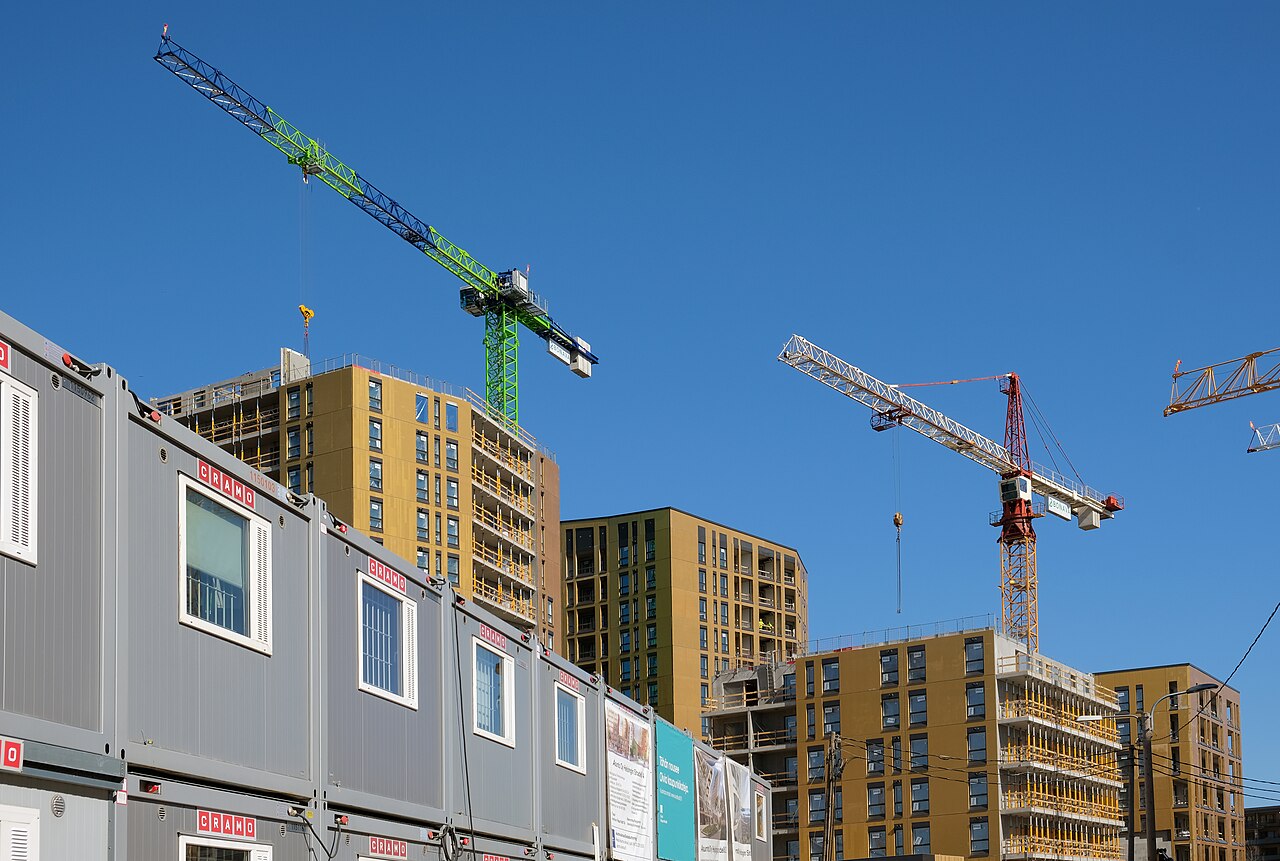
The land-for-flat construction contract is a mixed contract which contains, alongside the general provisions of the TBK on the contract for work, the provisions on the sale of immovable property relating to the transfer of the land share. While the landowner undertakes to transfer a particular share in the land to the contractor, or to promise such a transfer, the contractor undertakes to erect a building in its own name and on its own account and to deliver some of the independent sections (bağımsız bölüm) to the landowner.
Because the contract involves the transfer of a land share, it must under TMK 706 and the provisions of the Notaries Act be made in official form, as a deed drawn up before a notary. Land-for-flat construction contracts drawn up in ordinary written form may be treated as invalid for non-compliance with the formal requirement; however, where the construction has been completed and the parties have performed their obligations to one another, reliance on the defect of form may in some cases be regarded, under the rule of good faith, as an abuse of right.
In connection with this subject you may wish to look at our article dealing with the limitation periods in an action for annulment of the title deed and registration.
Methods of Security in the Land-for-Flat Construction Contract
In land-for-flat construction contracts the greatest risk for the landowner is that, after transferring the land share, the contractor will fail to complete the construction or will leave it unfinished. Various methods of security are used in practice in order to reduce this risk. One of them is the establishment of a mortgage in favour of the landowner over the independent sections transferred to the contractor; in this way, if the contractor fails to perform its obligations, the landowner may proceed to have the mortgage converted into money.
Another method is the transfer of the land share in stages, tied to particular phases of the construction; for example, not transferring the whole land share before the shell construction is complete encourages the contractor to act in conformity with the contract. In addition, methods such as a letter of guarantee, a bank guarantee, or restricting for a fixed period the transfer of some of the independent sections to third parties in the land registry (by means of an annotation) may also be agreed within the framework of freedom of contract.
The Basic Obligations of the Parties
The landowner’s basic obligation is to transfer the land share to the contractor on the conditions agreed in the contract and not to obstruct the carrying out of the construction. If there is a tenant in the existing building, the process of tenant eviction must first have been completed before construction can begin; if the tenant does not vacate voluntarily, the landowner may, where the conditions are met, also bring an action for eviction on grounds of need. The contractor’s basic obligation is to complete the construction in conformity with its permit, its project and its technical specification, within the agreed period, and to deliver in full the independent sections falling to the landowner.

Delay in Delivery and the Contractor’s Default
Where the delivery date agreed in the contract is missed, the contractor falls into default under the general provisions of the TBK on the default of the debtor. As a rule no separate notice is required for default to arise, because where a specific calendar day has been agreed in the contract as the delivery date, default comes about automatically once that date passes; obligations with dates of this kind are called obligations with a fixed due date (kesin vadeli borç).
A contractor in default becomes liable to compensate the loss arising from the delay. If a penalty clause has been agreed in the contract, the landowner may claim the penalty calculated by reference to the length of the delay; in addition, to the extent that it can prove the existence of a loss exceeding the penalty clause, it may also seek compensation for that loss, although for this there must be a provision to that effect in the contract or the contractor’s gross fault must be proved.
Force Majeure and Unforeseen Circumstances
Events in the nature of force majeure (mücbir sebep), such as an earthquake, a natural disaster or unforeseeable decisions of the administrative authorities, may mean that the contractor is not held responsible for the delay. However, there must be a causal link between the force majeure and the delay, and the contractor must have notified the landowner of the situation in good time. A mere worsening of general economic conditions is not as a rule accepted as force majeure; situations of that kind may instead be assessed within the framework of a request for adaptation based on excessive difficulty of performance.

Types of Penalty Clause and Their Application
In land-for-flat construction contracts a penalty clause (cezai şart) in the nature of a “delay penalty” is usually agreed; a penalty clause of this kind is specific to the case of an obligation not performed on time and, under TBK 179/3, the creditor may claim both performance of the obligation and this penalty together. Where, by contrast, an “alternative penalty clause” has been agreed, the creditor is obliged to choose between performance of the contract and the penalty clause; it cannot put forward both claims together.
The amount of the penalty clause may be freely determined by the parties; however, under TBK 182 the judge may of his own motion reduce a penalty clause he considers excessive. This power of reduction is regarded as a matter of public policy and cannot be excluded in advance by the parties. Where the contractor has the status of a merchant, the limitations specific to relations between merchants in the Turkish Commercial Code must also be taken into account separately.
Points to Watch in Calculating the Penalty Clause
The delay penalty is usually agreed as a fixed daily or monthly amount, or as a particular percentage of the value of the independent section. Setting out clearly in the contract such matters as the date on which the penalty clause begins to run, its maximum amount, and the independent sections for which it is to be calculated separately reduces the differences of interpretation that may arise later. In addition to the penalty clause, it is also possible to claim default interest at the current statutory interest rate on amounts left unpaid; you may make use of our statutory interest calculation tool for the calculation.
Termination of the Contract and Its Consequences
Where the delay exceeds a certain measure and it can no longer be expected of the landowner that it remain bound by the contract, termination of the contract may come onto the agenda within the framework of the general provisions of the TBK on the contract for work and on the default of the debtor. Termination generally requires that an additional period be granted to the contractor and that performance still not take place within that period; if the conditions for termination have been separately regulated in the contract, those provisions are taken into account first.
On termination the parties become obliged to return to one another the performances they have received. Land shares transferred to the contractor may be returned to the landowner; in return, the value of the works carried out by the contractor up to that point is calculated separately and paid to the contractor within the framework of the provisions on the contract for work and on unjust enrichment. This calculation is generally a technical process requiring examination by a court-appointed expert.
Illustrative Example: The Delay and Termination Process
The following example is entirely fictitious and illustrative in nature. Suppose that in a notarial contract signed with a contractor a landowner agreed that the building would be delivered within thirty-six months, but that the contractor proceeded with the construction irregularly and significantly exceeded that period. The landowner sends the contractor written notice with a view to putting into effect the penalty clause agreed in the contract, and grants a reasonable additional period. If the construction is still not completed within that period, the landowner may, while claiming the penalty clause, also terminate the contract where the conditions have arisen and request that the value of the works carried out be determined through a court-appointed expert.

The Contractor Becoming Insolvent or Bankrupt
The contractor falling into financial difficulty or becoming bankrupt while the construction is continuing is one of the serious risks encountered in land-for-flat construction contracts. If bankruptcy or composition (konkordato) proceedings have been commenced in respect of the contractor, the landowner’s rights turn into a complex situation requiring the provisions of the Enforcement and Bankruptcy Act and the rules of contract law to be assessed together; the fate of the land share transferred by the landowner and the position of the works carried out must be examined separately.
In situations of this kind, whether the landowner has the right to have the remaining part of the construction completed by another contractor is assessed according to the provisions of the contract and the general principles of the law of obligations. In practice, a landowner’s investigation of the contractor’s financial position and its performance on past projects at the contracting stage contributes to reducing risks of this kind that may arise later.

The Landowner’s Right of Inspection
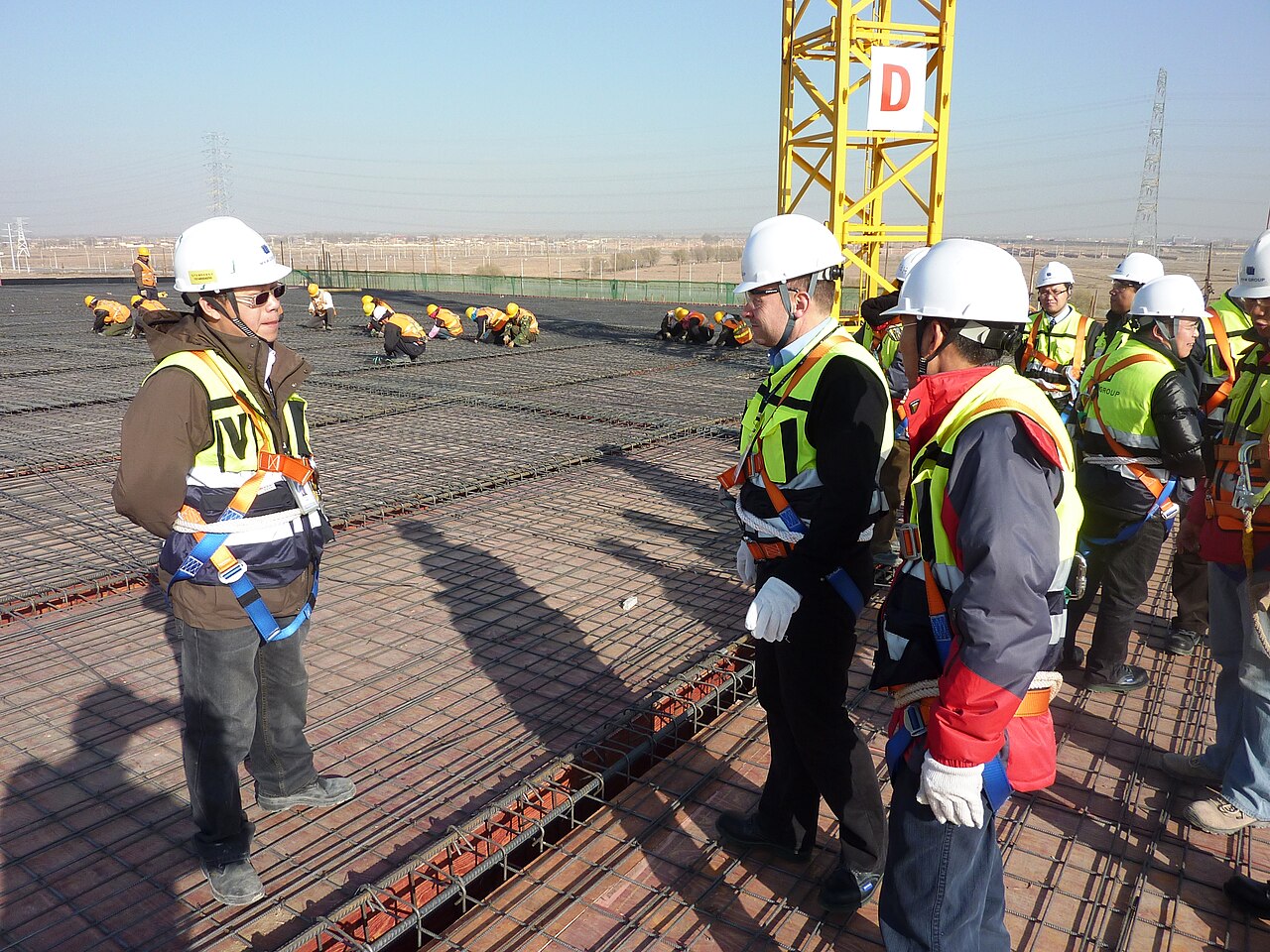
Under the general provisions on the contract for work, the landowner has the right to inspect whether the construction is being carried out in conformity with the contract, the project and the technical specification. This right of inspection may include on-site examination at the various stages of the construction (such as the foundations, the shell construction and the finishing works) and, where necessary, obtaining a report through an independent technical adviser or engineer. Any non-conformities identified during inspection should be notified to the contractor in writing and a reasonable period allowed for their correction.
The practice of regular inspection and written notification not only safeguards the quality of the construction, but also constitutes important evidence showing, in the event of a dispute later, that the landowner gave warning in good time and acted in good faith.
Defective Performance and Liability After Delivery
Even where the delivery period has been complied with, a failure of the independent sections delivered to conform to the project, the permit or the technical specification is treated as defective performance (ayıplı ifa). Under the general provisions on the contract for work, the landowner may demand that the defect be remedied, that the price be reduced, or, if the defect is serious, that the contract be terminated. Allegations of defective performance must be notified to the contractor within a reasonable period from the date of delivery; a delay in giving notice may lead to the loss of rights.
In land-for-flat construction contracts it is advisable for the landowner to draw up a detailed record of findings when taking delivery of the independent sections falling to it, and to note in that record any shortcomings there may be. Records of this kind form an important basis of proof in the event of a dispute later.
Although the law lays down no special requirement as to the form of the notice of defect, it is preferable for reasons of proof that the notice be given in writing and, if possible, conveyed to the contractor through a notary or by written correspondence. If the contractor does not accept the defect or does not remedy it, the landowner may have an examination carried out by a court-appointed expert in order to establish the existence of the defect and the cost of remedying it; that report forms the basic foundation in any subsequent proceedings.
Illustrative Example: How a Method of Security Works
The following example is fictitious and illustrative in nature. Suppose that a landowner, in order to secure completion of the construction, has established a mortgage in its own favour over the land share transferred to the contractor under the contract. When, during the construction process, the contractor falls into financial difficulty and stops the work, the landowner will, by relying on that mortgage, both have secured its claim and be in a stronger position in the process of renegotiation with the contractor. This example shows the practical importance of designing security mechanisms in advance, at the contracting stage.
A Comparison of How Delay and the Penalty Clause Are Applied
| Situation | What the Landowner May Claim | Basis |
|---|---|---|
| Simple delay in delivery | Delay penalty (penalty clause), if agreed in the contract | TBK 179 |
| The penalty clause being excessively high | A request to the court for a reduction (the judge may also reduce it of his own motion) | TBK 182 |
| Performance still not taking place despite an additional period | Termination of the contract and return of the performances | General provisions of the TBK, provisions on the contract for work |
| Unpaid claims | A claim for default interest at the current rate | Law no. 3095 |

Carrying out a construction project without a permit may also give rise to criminal liability; we address this subject in our article on the offence of causing zoning pollution.
The Legal Route to Follow in a Dispute, and Mediation
In disputes arising from a land-for-flat construction contract, before an action is brought, if at least one of the parties is a merchant and the claim concerns the payment of a sum of money, it may be necessary under the provisions of the Turkish Commercial Code on commercial cases for an application to have been made to a mediator as a condition of action (dava şartı arabuluculuk). In contracts where the landowner is not a merchant but the contractor carries out the construction within the framework of its commercial activity, whether this condition applies must be assessed separately according to the status of the parties and the nature of the claim.
It is important not to overlook whether the mediation process must be gone through before an action is brought in respect of claims for the payment of a sum of money, such as a penalty clause or delay compensation; omitting this condition may result in the action being dismissed on procedural grounds. By contrast, the mediation condition may not be required for claims that are not in the nature of a claim for performance, such as claims limited to termination and annulment of the title deed.
Matters to Watch When Preparing the Contract
When a land-for-flat construction contract is being concluded, it is of great importance that the delivery date be written in concrete terms leaving no room for argument (as a specific calendar date), that the method of calculating the penalty clause and its maximum amount be clearly stated, and that the conditions for termination and the procedure for the return of the performances be regulated in advance. Adding to the contract such matters as the stages at which the construction is to be inspected by the landowner and how the delivery record is to be drawn up also reduces the risk of a dispute.
Given that in land-for-flat construction contracts the parties enter into a relationship lasting for years, drafting the contract from the outset so as to anticipate possible difficulties and to protect the rights and obligations of both parties in a balanced way is the most effective way of avoiding the long and costly legal processes that may arise later.
It is also advisable to add to the contract the periods for obtaining the construction permit and the occupancy permit (iskan, the building use permit) and which party is to carry out those procedures; for a problem encountered in practice just as often as the delivery date being missed is that, although the construction is physically finished, the independent sections cannot be registered as such in the land registry because the occupancy permit cannot be obtained. Allocating responsibility for this clearly in the contract prevents the later argument over “whether or not the construction was delivered”.
For other related topics you may wish to look at our article explaining arrangements similar to the penalty clause in the process of collecting commercial debts and at our relevant practice area page. You may use our calculation tool for calculations relating to the subject. The sources of the TCMB (the Central Bank of the Republic of Türkiye) and the Ministry of Justice have been taken as the basis for current data.
For disputes that may arise in the course of registering the immovable property in the land registry once the project is complete, you may look at our article on disputes concerning the land registry record.
What Will the Other Side Do?
In disputes arising from a land-for-flat construction contract the contractor also has its own defence strategy; being prepared for that strategy determines how claims for the penalty clause and for termination will proceed.
- It may be argued that the delay was caused by force majeure and that the contractor was not at fault. Proving, through correspondence or official records, the causal link between the force majeure and the delay and that the situation was notified to the landowner in good time meets this defence.
- It may be asserted that the penalty clause is excessively high and a reduction may be requested under TBK 182. Showing that the penalty clause was negotiated by both sides when the contract was concluded, and submitting documents showing the actual loss suffered by the landowner, play a part in the assessment of this objection.
- It may be argued that the delivery date was not one with a fixed due date and that a separate notice had to be served. Proving from the wording of the contract that the delivery date was set as a concrete calendar day meets this defence.
- It may be asserted that the landowner did not perform its own obligations (such as tenant eviction or transfer of the land) in good time and that the delay cannot for that reason be attributed to the contractor. Delivery records and correspondence showing that the landowner performed its own obligations in good time must be submitted.
- It may be argued that on termination the value of the works carried out must be paid by the landowner. Clarifying the value of the works and any defective or incomplete works through an examination by an independent court-appointed expert is decisive in assessing this claim.
Which defence comes to the fore varies according to the content of the contract and the reason for the delay; for that reason it is important that correspondence and delivery records be kept in full from the very beginning of the process. To assess in advance which defence your file is likely to meet, you may get in touch with us.
Frequently Asked Questions
What is a land-for-flat construction contract?
It is a contract of mixed character based on the principle that the landowner transfers the land to the contractor and that the contractor leaves some of the independent sections it builds to the landowner.
What happens if the contractor misses the delivery date?
The contractor falls into default; if there is a penalty clause in the contract it may be claimed, and where the conditions have arisen the route of termination may also be taken.
Can the penalty clause and delay compensation be claimed together?
If it has been regulated in the contract as a delay penalty, it may be claimed together with performance; in the case of an alternative penalty clause, the parties may claim only one of the two.
If the penalty clause is very high, will the court reduce it?
Yes; under TBK 182 the judge may of his own motion reduce a penalty clause he considers excessive.
In what form must a land-for-flat construction contract be made?
Because it involves the transfer of a land share, it must be made as a deed drawn up before a notary; ordinary written form carries the risk of invalidity.
If the contract is terminated, what happens to the land shares?
The parties return what they have received; land shares transferred to the contractor may be recovered, while the value of the works carried out is calculated separately.
In land-for-flat construction contracts, delay, the penalty clause and termination are interwoven matters requiring both technical and legal assessment. Supporting every step with written documents, from the conclusion of the contract through to delivery and any dispute that may follow, is decisive for the parties in protecting their rights. For assessments in this field you may wish to look at our Real Estate Law practice area page.
Sources: Turkish Code of Obligations no. 6098 (mevzuat.gov.tr), the Official Gazette.
Related Articles and Sources
In connection with this subject, our articles entitled the collection of commercial debts and the action for annulment of the title deed and registration also contain useful information. For keeping track of current data and legislation, the resources of the TCMB’s current interest rate and exchange rate data and of the Union of Turkish Bar Associations may be used.
Sources
- Central Bank of the Republic of Türkiye (TCMB)
- Ministry of Justice
- Legislation Information System (mevzuat.gov.tr)
- Official Gazette (resmigazete.gov.tr)
- Union of Turkish Bar Associations
- The Time Limit for Renouncing an Inheritance: Procedure and the Case of an Indebted Deceased
- The Reserved Share and the Action for Abatement: How Is an Heir’s Right Protected?
- The Statutory Cap on Rent Increases: Residential and Workplace Differences in 2026
Related Articles
- Purchase of Immovable Property by Foreigners and the Citizenship Process (2026)
- Action for Annulment of the Title Deed and Registration: Collusion by the Deceased and Limitation
- Tenant Eviction 2026: The 10-Year Extension, Need and the Undertaking to Vacate
- Action for Eviction on Grounds of Need: Conditions and Proof
- The Offence of Causing Zoning Pollution (TCK 184): Unpermitted Construction
- The Collection of Commercial Debts: The Process Step by Step from Notice to Enforcement
This article is for general information purposes and does not take the place of legal advice. Your particular situation requires a separate assessment of your own file. This article was prepared on the basis of the legislation in force as at 17.09.2026.
Av. Yahya Köse
Enforcement and Bankruptcy Law, Real Estate Law, Lease and Eviction Law, Criminal Law, Dispute Resolution, Preventive Law
View the lawyer’s profile