
The purchase of immovable property by foreigners is subject to certain restrictions in Türkiye under article 35 of the Land Registry Law no. 2644 (Tapu Kanunu) and the related legislation, but it is nonetheless open to the nationals of many countries on the basis of reciprocity (mütekabiliyet); foreigners who buy immovable property above a particular investment threshold may also apply for Turkish citizenship by the exceptional route. In this article we address the subject within the framework of immigration and foreigners law, in terms of the general conditions for acquiring immovable property and the citizenship-by-investment process.
Key Takeaways
- The total area of immovable property and limited rights in rem (sınırlı ayni hak) that a foreign natural person may acquire across Türkiye is at most 30 hectares.
- Immovable property cannot be sold to foreigners in military forbidden zones and security zones.
- As of 2026, foreigners who buy immovable property worth at least USD 400,000 or the equivalent in foreign currency and who undertake not to sell it for 3 years may apply for Turkish citizenship by the exceptional route.
- In citizenship by investment, unlike the general route, the five-year residence requirement is not sought.
- The value of the immovable property must be evidenced by a report from a valuation expert licensed by the Capital Markets Board (SPK).
Can Foreigners Buy Immovable Property in Türkiye?
Yes. Under article 35 of the Land Registry Law no. 2644, nationals of the countries determined within the framework of the arrangements to which Türkiye is a party and of the principle of reciprocity may acquire immovable property in Türkiye; which countries’ nationals benefit from this right is determined by Presidential decision.
In 2012, the strict reciprocity requirement was abolished by Law no. 6302 and the power to determine whether foreigners may acquire immovable property was transferred to the executive; in practice, the nationals of countries that allow Turkish citizens to acquire immovable property are generally able to benefit from this right. That said, particular restrictions or complete prohibitions may apply to the nationals of certain countries; for that reason, the current position for the buyer’s nationality should be confirmed with the land registry directorate before the transaction. The current list and the rules of application may be followed on the immovable property acquisition page for foreigners of the General Directorate of Land Registry and Cadastre (Tapu ve Kadastro Genel Müdürlüğü).
Limits on the Amount of Immovable Property That May Be Acquired
The total surface area of immovable property and of the limited rights in rem over it that a foreign natural person may acquire across Türkiye is at most 30 hectares; in addition, at most ten per cent of the area within the boundaries of the development plan and local development plan in a given district may be kept open to foreigners.
In Which Areas Is the Sale of Immovable Property to Foreigners Prohibited?
In military forbidden zones, security zones and certain areas of strategic importance, immovable property cannot be sold or leased to foreigners under the Law on Military Forbidden Zones and Security Zones no. 2565; this restriction has been introduced on grounds of national security.
Whether an immovable falls within such a zone is clarified before the sale transaction by an opinion obtained from the relevant military and civil administrative authorities; the land registry directorates carry out this check of their own motion, and sales in zones that are not found suitable are not completed. In order to secure the safety of the transaction, the buyer is advised to investigate in advance whether the immovable they have agreed to buy falls within one of these restricted zones; otherwise unexpected delay or refusal may be encountered at the stage of the transfer of title.
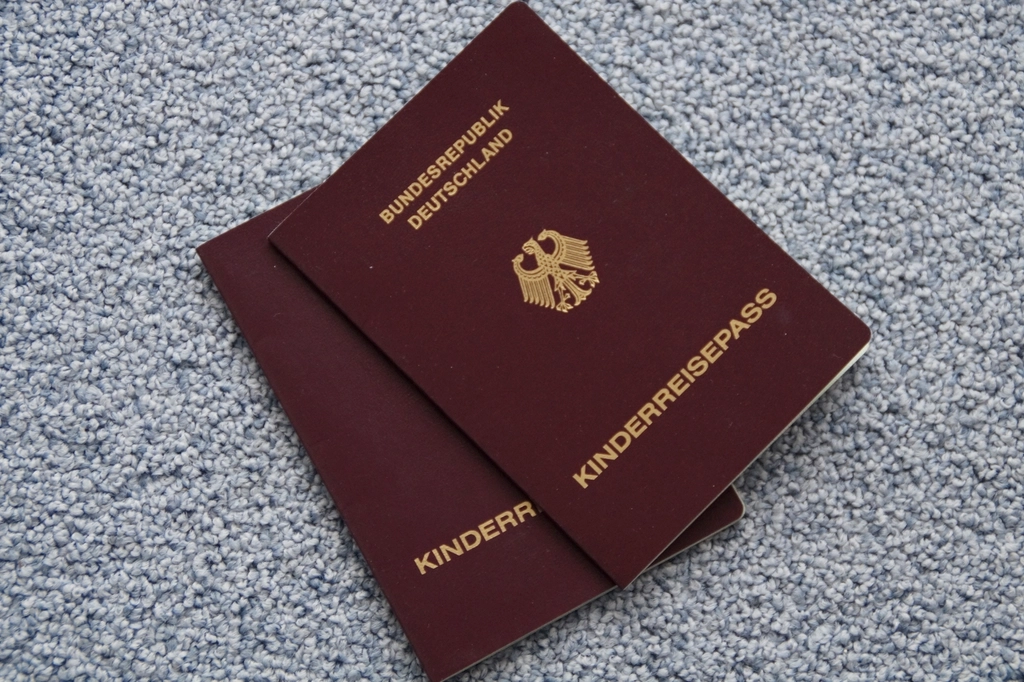
How Does the Title Transfer Process Work, Step by Step?
The purchase of immovable property by a foreigner begins with a promise-to-sell agreement (satış vaadi sözleşmesi) or directly with an official sale transaction at the land registry directorate; the parties attend the land registry directorate in person and complete the transfer by official deed, and ownership passes to the buyer at that moment.
The process generally consists of the following stages: first, it is checked whether the immovable falls outside a military forbidden zone and whether it is suitable for sale to a foreigner; the parties then agree on the price and the terms and, if necessary, a preliminary agreement (a promise-to-sell agreement) is drawn up before a notary. For the transfer of title, the foreign buyer’s passport, their tax identification number if any, and, where necessary, translated documents are prepared. On the day of transfer the parties attend the land registry directorate, payment of the price is confirmed, and the official deed is signed and the title registered in the buyer’s name. If the foreign buyer cannot attend in person, they may also carry out the transaction through a representative by means of a power of attorney (vekaletname). Detailed information about the action for annulment of title deed and registration, which may be resorted to in disputes that arise over the transfer of title, is available in a separate article.

Required Documents
For the transfer of title, a passport and its translation, a foreigner identification number, a biometric photograph, documents showing the current value of the immovable and, where necessary, a foreign currency purchase certificate are generally required; the land registry directorate may request additional documents depending on the nature of the transaction.
What Are the Tax and Fee Obligations?
On the purchase of immovable property, the title deed fee is paid by the buyer and the seller at a particular rate of the sale price; a VAT exemption may be applied on certain conditions to first acquisitions of a residence or business premises by foreign buyers, but the conditions of that exemption (such as payment in foreign currency and holding the property for a certain period) may change according to legislation that is updated every year.
If the foreign investor lets the immovable, the rental income obtained may be subject to income tax in Türkiye; for the nationals of countries with which a double taxation treaty exists, the provisions of that treaty must also be taken into account. If the immovable is disposed of, capital gains tax may arise depending on the holding period. These tax obligations must be assessed separately according to the nature of the particular case, the buyer’s nationality and the bilateral tax treaties. The legal process to be followed where a tenant of a let property has to be evicted is addressed in our article on eviction of tenants, the increase of the rent within the statutory limits in our article on the statutory limit on rent increases, and the situation where the owner needs to use the property themselves in our article on eviction on grounds of need.
Can Companies with Foreign Capital Acquire Immovable Property?
Legal persons established in Türkiye that include foreign capital may acquire immovable property not under the 30-hectare limit applied directly to foreign natural persons, but under a separate regime governed by the Turkish Commercial Code no. 6102 and the related special legislation; this regime may differ according to the company’s field of activity and the proportion of foreign shareholding.
Because a company with foreign capital is a legal person established in Türkiye, its acquisition of immovable property is as a rule subject to the same procedure as that of Turkish companies; however, if the company’s field of activity falls within sensitive categories such as agricultural land, the coastal zone or strategic areas, additional permission and review processes may arise. For that reason, those who plan a property investment through a company structure with foreign capital must also assess the special provisions that will apply according to the company’s field of activity and the nature of the immovable. Details of the contractual relationship that applies where foreign investors acquire immovable property from projects under construction are available in our article on the construction contract in return for flats.

How Is Turkish Citizenship Acquired by Buying Property for USD 400,000?
As of 2026, foreigners who buy one or more immovables of suitable quality worth at least USD 400,000 or the equivalent in foreign currency, and who have an annotation entered in the land register that the property will not be sold for three years, may apply for exceptional Turkish citizenship by investment within the framework of the Turkish Citizenship Law no. 5901.
The most important difference between this route and the general citizenship application is that there is no requirement of five years’ prior uninterrupted residence in Türkiye; if the applicant evidences that they have satisfied the investment condition, they may apply without waiting out a period of residence. The value of the immovable must be evidenced by a report prepared by a valuation expert licensed by the Capital Markets Board (Sermaye Piyasası Kurulu, SPK), and the sale price must be paid in foreign currency by transfer to Türkiye through the banking system. The three-year prohibition-of-sale annotation entered in the land register is made in order to secure the permanence of the investment; if the immovable is sold before that period expires, the citizenship condition may cease to be met.
The Position of Family Members
The foreign spouse of a person who acquires Turkish citizenship by investment, and the minor foreign children of that person and of their spouse, may also acquire Turkish citizenship under the relevant statutory provision; this shows that investor citizenship has been designed so as to cover family unity as well.
Which Documents Are Required for a Citizenship-by-Investment Application?
The application must include, in full, documents such as the land registry record of the immovable, the valuation report by an SPK-licensed expert, the bank receipt showing that the sale price was transferred in foreign currency, the land registry annotation that the property will not be sold, and identity/passport documents; the assessment of the application is a matter for the discretion of the competent authorities.
| Condition | Citizenship by the General Route | Citizenship by Investment |
|---|---|---|
| Period of residence | At least 5 years uninterrupted | Not required |
| Investment condition | None | Immovable property of at least USD 400,000 |
| Restriction on sale | None | 3-year prohibition-of-sale annotation |
| Inclusion of family members | A separate application may be required | The spouse and minor children may be included |
Is the Acquisition of Immovable Property by Inheritance Subject to Different Rules?
A foreigner’s acquisition of an immovable located in Türkiye by way of inheritance may, in the case of statutory heirship, take place independently of the general restrictions on acquisition (such as reciprocity and the 30-hectare limit); in the case of acquisition by will, however, those restrictions may arise once again.
Because statutory heirship takes place automatically on the death of the deceased, the share of the inheritance passes to the foreign heir regardless of whether they satisfy the conditions for acquiring immovable property in Türkiye at that moment. By contrast, where the deceased appoints a foreigner as heir by will, it may be required, for that appointment to be given effect, that the appointed person satisfy the general conditions of acquisition (such as reciprocity and the property falling outside a forbidden zone). This distinction is a point at which the law of succession and the regime governing the acquisition of immovable property by foreigners intersect, and it must be assessed carefully in practice.
Are There Additional Restrictions on Acquiring Agricultural Land?
The acquisition by foreign natural persons of immovable property that qualifies as agricultural land is subject, in addition to the general 30-hectare limit, to the special agricultural legislation governing the principles of the indivisibility of agricultural land and its use in accordance with its purpose.
The rules limiting the division of agricultural land by inheritance or transfer apply to foreign buyers as well; for that reason, on the sale of an immovable of agricultural character to a foreigner, the relevant administrative authorities may separately assess whether the agricultural integrity of the land is preserved and whether the acquisition is being made for a non-agricultural purpose. For immovables that qualify as a residence or business premises, no such additional review is as a rule required.
The Assessment of National Security and Public Order
The fact that the investment condition has been satisfied does not mean that citizenship is acquired automatically; there must be no circumstance constituting an obstacle in terms of national security and public order, and the final decision depends on the assessment of the competent authority.
Citizenship by investment is therefore not an automatic right acquired once the conditions are met, but an administrative process completed by the acceptance of the application. Matters such as whether the applicant has in the past engaged in conduct threatening public order, and whether the security investigation produces an adverse result, are taken into account in the assessment by the competent authorities. If the security assessment is adverse, the application may be refused even though the property investment condition has been satisfied; in that case the applicant’s ownership of the immovable is not affected, only the citizenship request has not been accepted. It is therefore a sound approach to regard the investment decision not as an outcome in which citizenship is definitively assured, but as a precondition for the application.
The Approximate Duration of the Application Process
The time taken for a citizenship-by-investment application to be concluded varies according to the workload of the relevant institutions, the completeness of the documents submitted and the course of the security investigation; preparing the documents completely and correctly prevents the process from being prolonged unnecessarily.
Illustrative Example: The Process from Buying Property to Citizenship
The following example is entirely fictitious and is not based on any real client or file; it has been prepared purely by way of illustration, in order to explain how the process works. A foreign investor plans to buy a residence in Istanbul worth USD 450,000. First it is confirmed that the immovable falls outside a military forbidden zone and does not exceed the general 30-hectare limit; an SPK-licensed expert values the immovable; the price is paid in foreign currency by transfer to a bank in Türkiye; and a three-year prohibition-of-sale annotation is entered in the land register. With these documents the investor makes an exceptional citizenship application; if the application passes the security assessment, the investor, their spouse and their minor child may acquire Turkish citizenship.
Does Buying Property Give a Right of Residence?
Foreigners who buy immovable property in Türkiye may apply for a short-term residence permit under the Law on Foreigners and International Protection no. 6458; this is a separate right, independent of the citizenship application, which can be obtained at a lower investment threshold.
The property value threshold sought for a short-term residence permit is different from, and generally lower than, the USD 400,000 threshold sought for exceptional citizenship; for that reason, buying property as a route to a residence permit may be considered as a separate option by foreigners who only want permission to live in Türkiye and are not aiming at citizenship. The duration of the residence permit and the conditions for its renewal may be tied to conditions such as continuing to hold the immovable; the current thresholds and conditions should be confirmed at the date of application from the relevant migration administration legislation.
What Will the Other Side Do?
In the purchase of immovable property by foreigners and in citizenship-by-investment applications, there are points to which the seller or the competent authorities also pay attention; knowing these in advance allows the process to move forward without delay.
An assessment that the immovable falls within a military forbidden zone or a security zone. The land registry directorate carries out this check of its own motion; obtaining a favourable opinion from the relevant civil administrative and military authorities before the transaction prevents this risk.
An assessment that the price shown in the land register does not reflect the true value. This is met with a report from an SPK-licensed valuation expert and a receipt showing that the price was transferred in foreign currency through the banking system.
An assessment that the reciprocity requirement is not satisfied. This is prevented by confirming the current Presidential decision list for the buyer’s nationality with the land registry directorate before the transaction.
An assessment that there is an adverse record in the security investigation. This can be minimised by preparing the application documents completely and correctly; the final assessment rests with the competent authority.
Which assessment comes to the fore varies according to the location of the immovable and the applicant’s particular circumstances; for that reason it is important that the documents be prepared in full before the transaction. To see in advance which assessment your file is likely to meet, you may get in touch.
Frequently Asked Questions
Can the nationals of every country buy immovable property in Türkiye?
No. Which countries’ nationals may acquire immovable property is determined by Presidential decision within the framework of the principle of reciprocity; restrictions or prohibitions may apply to the nationals of certain countries.
Can foreigners buy an unlimited amount of immovable property across Türkiye?
No. The total of the immovable property and limited rights in rem that a foreign natural person may acquire is at most 30 hectares.
Must the USD 400,000 investment be made through a single immovable?
No; a citizenship-by-investment application may also be made where the total value of more than one immovable meets this threshold.
Is there a residence requirement for citizenship by investment?
No; unlike the general route, this method does not require five years’ prior residence in Türkiye.
What happens if the property is sold before the three years are up?
The three-year prohibition-of-sale annotation in the land register is there to secure the permanence of the investment; a sale before that period expires may amount to a breach of the citizenship condition.
Can an immovable in a military forbidden zone be sold to a foreigner?
No; under Law no. 2565, immovable property cannot be sold or leased to foreigners in military forbidden zones and security zones.
Must the foreign buyer be present in Türkiye in person for the transfer of title?
No; the transaction may also be completed through a representative by means of a power of attorney.
Is tax deducted from a foreign investor’s rental income?
Rental income obtained in Türkiye is as a rule subject to income tax; for countries with which a double taxation treaty exists, the provisions of the treaty are also taken into account.
Does buying property provide citizenship directly, or a residence permit?
These are two separate routes. Citizenship requires the USD 400,000 threshold and an application process, whereas the purchase of a lower-value immovable may only allow an application for a short-term residence permit.
Can immovable property be left to a foreigner by will?
It can, but in that case the appointed foreign heir may be required to satisfy the general conditions of acquisition (such as reciprocity and the property falling outside a forbidden zone); this is a different assessment from that applying to statutory heirship.
Table of Time Limits
| Period | How long | Starting point |
|---|---|---|
| Undertaking not to sell the immovable | 3 years | From the date the land registry annotation is entered |
Sources
- Mevzuat Bilgi Sistemi (the Legislation Information System, mevzuat.gov.tr)
- tkgm.gov.tr
- Mevzuat Bilgi Sistemi (the Legislation Information System, mevzuat.gov.tr)
- Mevzuat Bilgi Sistemi (the Legislation Information System, mevzuat.gov.tr)
- Göç İdaresi Başkanlığı (the Presidency of Migration Management)
Related Articles
- Action for Annulment of Title Deed and Registration: Collusion by the Deceased and Limitation
- Eviction of Tenants 2026: The 10-Year Extension, Need and the Undertaking to Vacate
- The Statutory Limit on Rent Increases: Residences and Business Premises in 2026
- Eviction on Grounds of Need: Conditions and Proof
- Delay and Penalty Clauses in the Construction Contract in Return for Flats
- Latent Defects and Odometer Tampering in Second-Hand Vehicles
- Opposition to a Trade Mark Application and the Assessment of Similarity
- The Rights of a Suspect at the Statement and Interrogation Stage: The First 24 Hours
- The Offence of Causing Environmental Pollution Through Development (TCK 184): Unlicensed Construction
This article is for general information purposes and does not take the place of legal advice. Your particular situation requires a separate assessment of your own file.
This article was prepared on the basis of the legislation in force as at 17.09.2026.
KCD Hukuk
View our team